
Sell-off in the Bond Market is a Good Thing, Not a Crisis

James Carville famously said, “When I die, let me come back as the bond market because then I could intimidate everybody.” In multiple instances, even Trump has shown he cares more about the bond market than the stock market.
What gives the bond market this mysterious power? In short, it sits near the center of the entire financial system. Globally, the yield on the 10-year Treasury is treated as a rough “risk-free” benchmark. If investors can earn 4.5% from a Treasury bond, then riskier debt has to offer more than that, or investors will simply choose the safer option.
From the Treasury benchmark, rates move up the ladder. When the 10-year Treasury yields about 4.5%, higher-risk borrowers generally must pay more. High-quality corporate bonds may yield around 6%, with high-yield “junk” at 7% to 8% or higher. Mortgage rates may rise to 6.5%, with car loans at 8.5% or more. That is why a move in the 10-year Treasury from 4.5% to 5.2% matters so much: it can push the entire borrowing ladder higher, raising costs across the board.
Consider a scenario where 10-year Treasury yields jump to 5.5%, perhaps because Japan begins selling more Treasuries, creating more supply, lowering prices and raising yields; small and mid-size businesses would find it harder and more expensive to borrow. Some would delay investment, cut spending, reduce hiring, or even fail. Mortgages, credit cards, auto loans, and other forms of debt would become more expensive, which would weigh on spending and confidence.
That negative economic pressure could then spread to small and regional banks, as well as to insurers and creditors exposed to those borrowers. At that point, a bond-market sell-off could turn into a broader financial crisis. Fortunately, we aren’t close to that yet. Until then, the message from the world’s bondholders to consumers is to restrain spending.
And yet, rising rates are not all bad. If you have money to lend and prefer the certainty of a loan to company stock (like a retiree, pension plan or a hedge fund), it just got a little better for you. And there are other bright spots because high yields now predict better bond returns in the future. In other words, bonds are cheap right now!
First, let’s get past the hype. News media are inventing a story here by declaring a bond rout (crisis, bear market). When you read past the clickbait headlines, the ultimate take is more neutral than anything (e.g., Wall Street Journal and Bloomberg). No one is certain of the cause, and I’ve read at least a dozen “reasons” for the bond market sell-off: inflation, war/fuel shortages, boomers, government borrowing, swelling fiscal deficit, low growth, too much supply (exUS), too much demand (US), rate risk, aging populations, and the new Federal Reserve chair.
Second, a rising bond market is good. It’s a sign of a robust, even overheating economy in need of a cool-down to stave off inflation. Bond markets are acting exactly like they should.
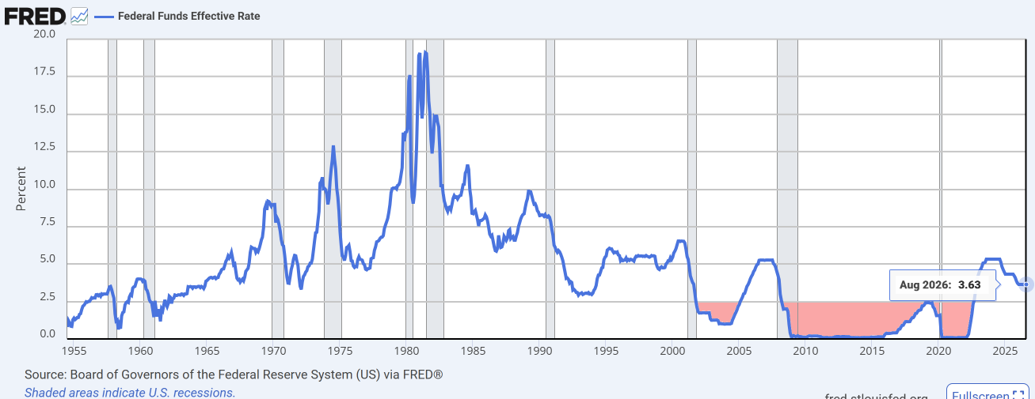
Third, this is normal. Rates are back to where they were for most of the last 30 years. The low rates (like 3% mortgages) were a temporary period – see chart below.
Fourth, it won’t harm your retirement. It’s just temporarily disappointing. Your goal for your bond portfolio is “return of capital, not return on capital,” says Morningstar last week. When bonds fall in value, they don’t fall as far as stocks. In 2022, bonds were down about 13%, and today they are down 5% for the year. Compare that to a bad stock market, which might have lost 50%. Bonds can still preserve capital (albeit imperfectly) in the short run. In the long run, if you hold a bond to maturity, you will get exactly the rate of return you were promised when you bought it.
As we said above, bonds are cheap right now. Treasury Inflation Protected Securitized bonds are an amazing deal, offering nearly 3% real (which is your gain after inflation). We are moving internal portfolios from ETFs to 0.00% management fee Treasury bonds to take advantage of longer duration offerings to lock in these rates.
Don’t hesitate to reach out if you are interested in this or any aspect of financial planning and investment management.